In this blog post MCP A2A OpenTelemetry and OAuth Every Architect Must Track in 2026 we will look at why these four standards now shape security, observability, and platform choice for enterprise agentic AI.
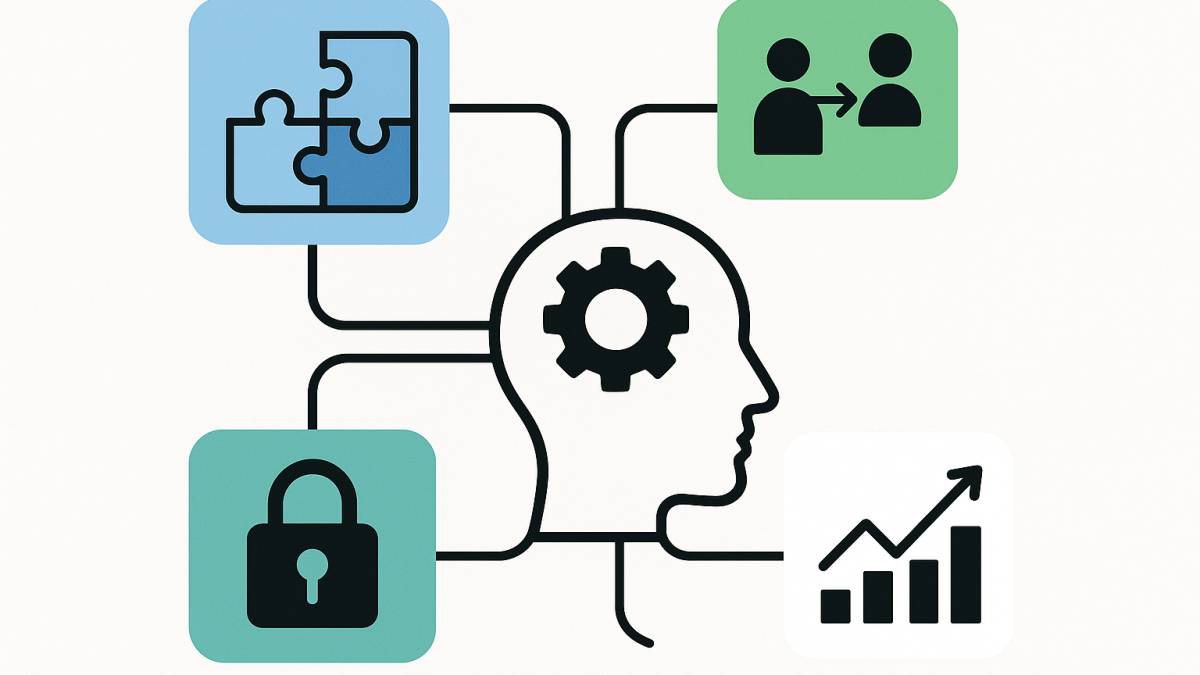
At a high level, enterprise agent platforms are settling into four layers. MCP connects an agent to tools and data, A2A lets one agent work with another, OAuth controls identity and access, and OpenTelemetry shows what actually happened when the system ran.
In my experience, most early agent discussions still focus too heavily on model quality. That matters, but after more than 20 years working as a Solution Architect and Enterprise Architect across Azure, Microsoft 365, AI, and cybersecurity, I think the harder question is simpler: can you trust what the agent is allowed to do, who it is acting for, and whether you can prove what happened afterward?
That question comes up often in the work I do from Melbourne with organisations across Australia and internationally. As a published author and a hands-on architect, I keep seeing the same pattern: the demo works, the business gets excited, and then the real architecture questions appear all at once.
Why these four standards matter together
These standards are not competing ideas. They are different parts of the same control plane for enterprise AI.
MCP is mostly about agent-to-tool communication. A2A is about agent-to-agent coordination. OAuth is the identity and delegated access layer underneath both. OpenTelemetry is the evidence trail that lets operations, security, and audit teams understand the difference between a successful answer and a successful outcome.
Business user
 -> Client agent
 -> OAuth token and policy
 -> MCP call to tools and data
 -> A2A task to another agent when needed
All steps
 -> OpenTelemetry traces, metrics, and logs
If one of these layers is weak, the platform becomes hard to govern. If two are weak, it becomes dangerous.
MCP is how tools enter the conversation
At a high level, MCP gives agents a standard way to discover and use tools, resources, and prompts. I explain it to business leaders as the connector layer that turns an LLM from a smart interface into a system that can actually act on enterprise data and systems.
That is why MCP matters so much in 2026. It is moving beyond simple local demos into remote, authenticated, enterprise use cases, with more formal versioning and official authorization extensions now part of the discussion.
The real lesson from projects is that tool connectivity is not the hard part. Safe tool connectivity is the hard part.
One pattern I keep running into is overexposed capability. Teams stand up an MCP server, connect it to useful internal systems, and assume the hard work is done. In reality, they have just created a new control surface that needs clear scopes, clear policy, and a clean separation between read actions, high-risk write actions, and administrative actions.
Another issue is lifecycle behaviour. Long-running tasks, retries, expiry, and partial completion all sound like implementation details until a finance, HR, or customer workflow is involved. Then they become architecture decisions with business consequences.
A2A is how agent sprawl becomes architecture
A2A matters because very few enterprise workflows will end up with one agent doing everything well. In practice, one agent may handle user interaction, another may specialise in data retrieval, and another may own a domain process such as scheduling, procurement, or compliance review.
The promise of A2A is interoperability. A client agent can discover another agent’s capabilities, hand off a task, receive updates, and work across platform boundaries without every vendor inventing a private integration model.
That sounds abstract, but it has a very practical consequence. The moment agents start delegating to other agents, your architecture is no longer just about tools. It is about trust between software actors.
This is where many leaders underestimate the problem. If Agent A can call Agent B, and Agent B can call three tools plus Agent C, who is the real actor from a governance point of view? The user, the calling agent, the remote agent, or the platform service account sitting underneath all of them?
If your answer is some version of all of the above, you do not have an identity model yet. You have a future audit problem.
I am encouraged that A2A is now maturing under more open governance and adding more stable interfaces. That matters because enterprise architects should be very cautious about betting cross-agent communication on a vendor-specific protocol that may not survive product strategy shifts.
OAuth matters because agent identity comes before agent intelligence
This is the point I feel strongest about. The first security problem in enterprise agentic AI is not prompt injection, model drift, or hallucination. It is identity.
More specifically, it is the inability to distinguish clearly between human identity, application identity, and agent identity. When those three get blurred together, everything else gets harder: least privilege, auditability, approval, incident response, and even basic troubleshooting.
Modern OAuth gives enterprises a familiar foundation for solving this. It provides delegated access, short-lived tokens, machine-to-machine flows, metadata for discovery, and clearer boundaries around protected resources.
But OAuth alone is not the answer. The architecture around OAuth is what matters.
In my experience, a common mistake is to let every agent share one broad service account because it gets the pilot running quickly. That shortcut creates silent privilege creep. Six months later, nobody can say with confidence whether an action was taken on behalf of a user, a background process, or an autonomous agent chain.
For Australian organisations, this is where the conversation should connect back to established governance disciplines. Essential Eight maturity, ACSC logging expectations, and Australian privacy obligations all become harder to satisfy when agent actions cannot be tied cleanly to identity, scope, and intent.
At minimum, I want to see four things. Separate identities for users and workloads, short-lived credentials, explicit scopes tied to business actions, and strong controls around token handling so credentials are not casually passed between clients, agents, and downstream tools.
In other words, do not ask first whether the agent is smart. Ask whether the agent is identifiable, constrainable, and accountable.
OpenTelemetry is how you find silent failures
The hidden risk in enterprise agentic AI is not always the hard failure. It is the silent failure.
Silent failures are the ones that look successful at the surface. The assistant replies fluently, the workflow appears complete, and the dashboard stays green. Only later do you discover the action never committed, the wrong system received the request, the retry used stale context, or the handoff to another agent quietly dropped a business-critical field.
This is exactly why OpenTelemetry matters. It gives you a common way to capture traces, metrics, and logs across the path from prompt to model call to tool invocation to remote agent handoff to business transaction.
That is becoming more important as OpenTelemetry grows more specific support for generative AI, agent spans, and even MCP-related conventions. The standards are still maturing, but the direction is clear: enterprise observability for AI cannot stop at API latency and token counts.
What I want to see is end-to-end evidence. Which user started the workflow, which agent planned it, which tool calls were made, which remote agent accepted the task, what policy checks were applied, what retries occurred, and where the final business state changed.
Without that chain, leaders end up making risk decisions based on polished outputs instead of operational facts. That is not observability. That is hope.
A task returned completed, but the downstream system rejected the update.
An expired token triggered a fallback response that sounded plausible but used cached data.
An A2A handoff technically succeeded, but the receiving agent lacked the right user context.
A tool call retried three times and created duplicate side effects because idempotency was never designed.
Those are the failures that damage executive trust fastest because they are hard to spot and harder to explain.
How I evaluate agent platforms in 2026
When I review an enterprise agent platform now, I am less interested in the chatbot demo and more interested in the operating model underneath it. These are the questions I use most often.
1. Can the platform model identity properly
Can it separate end-user identity, workload identity, and agent identity? Can it support delegated access without collapsing everything into one shared credential?
2. Does it support open interoperability cleanly
MCP and A2A should not be treated as nice-to-have checkboxes. I want to know how the platform handles versioning, capability discovery, asynchronous task state, and enterprise authorization patterns.
3. Is observability built in rather than bolted on
If the platform cannot emit meaningful OpenTelemetry data across prompts, tools, agent tasks, and policy decisions, operational maturity will be expensive later. Good platforms make traces and redaction part of the design, not a post-project patch.
4. How does it handle silent failure modes
Ask about retries, timeouts, partial completion, compensating actions, duplicate suppression, and human approval points. The strongest platforms are usually the ones willing to talk openly about failure states.
5. Does it fit the governance reality of your organisation
For many Australian enterprises, that means mapping back to Essential Eight, cyber logging, access review, data classification, and privacy obligations early. If the platform team says governance can be added later, that is usually a warning sign, not a roadmap.
What good looks like
From what I have seen, good architecture in this space is surprisingly unglamorous. Each agent has a distinct identity. Each tool call has explicit scope. Each cross-agent handoff is traceable. Each high-risk action has policy and, where needed, human approval.
That may sound less exciting than autonomous digital workers doing everything end to end. But in enterprise environments, boring control is usually what allows useful innovation to survive contact with reality.
Final reflection
The market still talks mostly about smarter agents. I think the more important conversation for 2026 is more accountable agents.
MCP, A2A, OAuth, and OpenTelemetry are not the whole enterprise AI stack, but they are quickly becoming the standards that separate experimental agent systems from governable ones. The question I keep coming back to is simple: when one of your agents acts at scale, will your architecture know exactly who acted, what it touched, and why?
- Enterprise AI Agents Need Standards Before They Need Scale in 2026
- OpenAI Agents SDK vs LangGraph in 2026 What CIOs should standardise on
- What GPT‑5.3 Instant Signals for the Future of Enterprise AI
- Anthropic’s DoD stance just changed what “safe” enterprise AI means
- OpenAI’s $110B Raise and What It Changes in Enterprise AI Roadmaps
