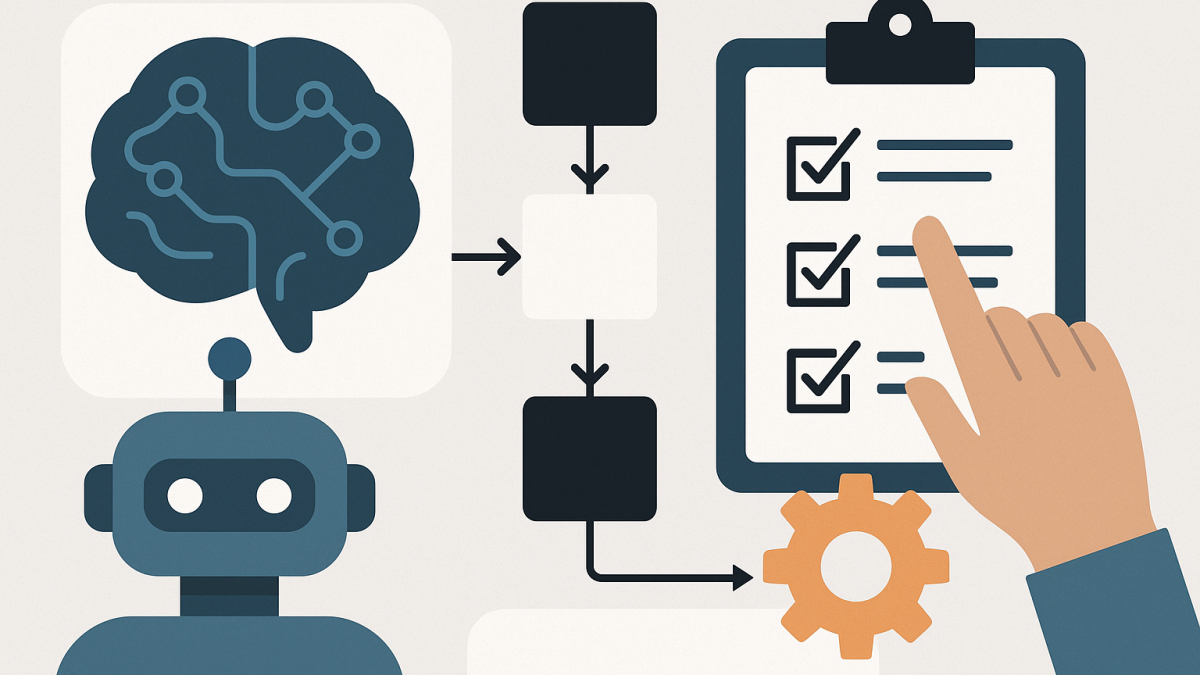
In this blog post OpenAI Agents SDK vs LangGraph in 2026 What CIOs should standardise on we will unpack what each framework is really optimised for, and how I’d standardise across an enterprise without betting the farm on one abstraction.
I keep seeing the same pattern in 2026. Teams don’t fail to deliver “AI agents” because the models are weak; they fail because orchestration, state, and governance were treated like implementation details.
The title of this post, OpenAI Agents SDK vs LangGraph in 2026 What CIOs should standardise on, is really a question about operating model. Do you want lightweight, code-first agent handoffs, or durable, auditable workflows that survive restarts, approvals, and long-running processes?
High-level first: what are we even standardising?
At a board level, “agents” sound like autonomous workers. In practice, enterprise-grade agents are workflow systems with an LLM in the loop.
They take intent (a request), use tools (APIs, data stores, ticketing systems), follow policies (security and compliance), and produce outcomes (a decision, a draft, a change, an escalation). The hard part isn’t calling a model; it’s deciding who does what, when to pause, what to remember, and how to prove what happened.
The core technology behind both approaches
Both OpenAI Agents SDK and LangGraph sit in the orchestration layer. They don’t replace your apps, your identity platform, or your data governance. They coordinate how an LLM interacts with tools and state.
- OpenAI Agents SDK is a developer-friendly way to define agents (instructions + model + tools) and let them run, including handing work to other specialised agents. The emphasis is on straightforward code, tool calling, streaming, and a clear trace of what the agent did.
- LangGraph is a graph-based runtime where each step is a node, and edges define what can happen next. The emphasis is durable execution: checkpointing, resuming after failures, long-running workflows, and first-class human-in-the-loop patterns.
If you’re a CIO, the simplest mental model is this. OpenAI Agents SDK is often a great fit for “fast, stateless-ish” agent experiences. LangGraph is a great fit for “process, state, and control”.
My 2026 decision framework for standardisation
After 20+ years in enterprise IT as a Solution Architect and Enterprise Architect, I’m wary of “one framework to rule them all”. What works for a developer productivity assistant may be the wrong choice for customer remediation or financial approvals.
Here are the five questions I use to decide what to standardise on.
1) Do you need durable state, or can you tolerate restart-and-retry?
If an agent run can be safely re-triggered (e.g., “summarise this document”, “draft a response”), durability is helpful but not existential.
If a workflow spans hours or days (approvals, escalations, staged rollouts, incident response), you want a runtime that treats state as a first-class citizen. In my experience, this is where many pilots quietly fall apart in production.
2) How much human oversight is non-negotiable?
Most enterprises in Australia will need human checkpoints for high-impact actions. Think payments, customer entitlement changes, security controls, or anything that could trigger a notifiable incident.
LangGraph’s graph model maps naturally to “pause here, get approval, continue there.” You can build that with OpenAI Agents SDK too, but you’ll be designing more of the control plane yourself.
3) What’s your vendor posture: OpenAI-first or provider-agnostic?
In 2026, many organisations are multi-model by necessity. Cost, latency, sovereign concerns, and capability differences push teams to use more than one provider, even if they have a preferred platform.
If your direction is “OpenAI is a strategic platform,” the Agents SDK aligns well and stays pleasantly minimal. If your direction is “avoid coupling to one model provider,” a graph runtime that’s comfortable in a mixed ecosystem often reduces friction.
4) What’s your tolerance for abstraction overhead?
I’ve seen teams ship quickly with a high-level agent framework, then spend the next six months debugging invisible behaviours: prompt wrapping, retries, tool selection quirks, and token blowouts.
OpenAI Agents SDK tends to feel closer to the metal. LangGraph’s structure can be a benefit, but it does introduce a “runtime mindset” that teams must learn. Neither is wrong; the question is which complexity you want.
5) What must be provable for audit and security?
This is the point leaders underestimate. It’s not enough that the agent produced the right answer. In regulated environments you need to show:
- What data it accessed, and why
- Which tools it invoked
- Who approved what
- What the model was instructed to do at the time
- How you prevent prompt injection and data exfiltration pathways
Both approaches can be made auditable. The difference is how much you have to build around them to meet your governance bar (and, in Australia, how you align to ACSC Essential Eight expectations like controlled admin privileges, application control, and logging).
What I’d standardise on in a typical enterprise
If you force me to pick a single “standard,” I’d standardise on a two-tier pattern, not a single library.
Tier 1 standard: Lightweight agent experiences (OpenAI Agents SDK style)
Use a minimal, code-first agent SDK for front-door experiences where speed and iteration matter:
- Internal copilots for Microsoft 365 content workflows (drafting, summarising, classifying)
- Developer productivity assistants (ticket triage, runbook suggestions)
- Knowledge base Q&A over curated content with clear guardrails
My rule: if you can safely fail fast and retry, keep orchestration simple. Don’t accidentally build a workflow engine when you just needed a tool-calling loop.
Tier 2 standard: Durable business workflows (LangGraph style)
Use a durable, checkpointed runtime for “real work” that must survive interruptions and approvals:
- Identity and access workflows (access requests, entitlement reviews) with human approval
- Security operations flows (phishing triage, incident enrichment, containment recommendations)
- Finance or procurement processes where steps must be replayable and auditable
- Customer-impacting changes where rollback and traceability matter
This is where graph orchestration earns its keep. The workflow is the product, not the chat.
A practical architecture that avoids lock-in
Here’s the standardisation move I’ve found most effective. Standardise on interfaces and control points, not a single framework.
- Tool layer standard: every tool is a versioned function with clear input/output schemas, strong auth, and logging. Tools should not be “whatever the agent wants.” They are products with owners.
- Policy layer standard: centralised rules for data access, model usage, PII handling, and action approvals. In Australia, this is where privacy obligations and Essential Eight-aligned controls show up in concrete implementation.
- State layer standard: a consistent way to store conversation/workflow state, audit logs, and decisions. Even if one team uses OpenAI Agents SDK and another uses LangGraph, they should land state the same way.
- Observability standard: traces, tool invocations, latency, token costs, and failure modes are visible to engineering and risk teams.
When you do this, switching orchestration frameworks becomes painful but possible. Without it, you end up locked into whichever team shipped first.
An anonymised real-world scenario from the field
A large Australian organisation I worked with (Melbourne-based team, national footprint) started with a simple agent to help the service desk summarise incidents and suggest next actions.
It worked well in demos. In production, the pain surfaced when they tried to extend it into “close the ticket, notify the customer, and create a change request if needed.” Suddenly they needed approvals, retries, and replayability.
We split the solution. The chat-facing experience stayed lightweight and fast. But the moment it crossed into system-changing actions, the request turned into a durable workflow with checkpoints, human approvals, and explicit audit records.
The outcome wasn’t just technical. It reduced rework, improved trust with risk stakeholders, and made it easier to prove what happened when something went wrong.
What developers ask next: show me the difference
Below are simplified examples to make the contrast concrete. These aren’t meant to be copy-paste production code; they’re a sketch of the mental model.
OpenAI Agents SDK style: a direct, code-first agent with tools
// Conceptual example
import { Agent } from "@openai/agents";

const ticketAgent = new Agent({
 name: "Ticket Triage",
 instructions: "Summarise the ticket. Recommend next actions. If risk is high, request human review.",
 model: "gpt-5-nano",
 tools: [lookupKb, fetchTicket, draftCustomerReply]
});

// Run it like a normal function call
const result = await ticketAgent.run({
 input: "Ticket #18423: user reports suspicious MFA prompts..."
});
This shines when the workflow is short and you want your engineers to reason in normal control flow. It’s easy to read, easy to test, and fast to evolve.
LangGraph style: a durable workflow with checkpoints and human gates
# Conceptual example
# Nodes: ingest -> enrich -> decide -> (human_approve?) -> act -> audit

state = {
 "ticket_id": "18423",
 "risk": None,
 "recommended_actions": [],
 "approval": None
}

# The graph runtime persists state between nodes.
# If the process restarts mid-way, it resumes from the last checkpoint.
This shines when you must guarantee continuity, build in approvals, and support long-running, multi-step processes that can’t be “just retried.”
My recommendation in one sentence
If you’re standardising in 2026, I’d treat OpenAI Agents SDK as the fast path for lightweight agent experiences, and LangGraph as the standard for durable, auditable business workflows.
A closing reflection for CIOs
The real standardisation opportunity isn’t picking a winner. It’s defining where autonomy ends, where process begins, and how your organisation proves control when an AI-assisted workflow makes a real-world change.
If you look across your portfolio today, which agent initiatives are still “smart chat,” and which ones have quietly become business processes that deserve the same engineering discipline as any other enterprise platform?
- OpenAI’s $110B Raise and What It Changes in Enterprise AI Roadmaps
- Anthropic’s DoD stance just changed what “safe” enterprise AI means
- What GPT‑5.3 Instant Signals for the Future of Enterprise AI
- A Practical Checklist for Evaluating Gemini 3.1 Flash Lite vs GPT Claude
