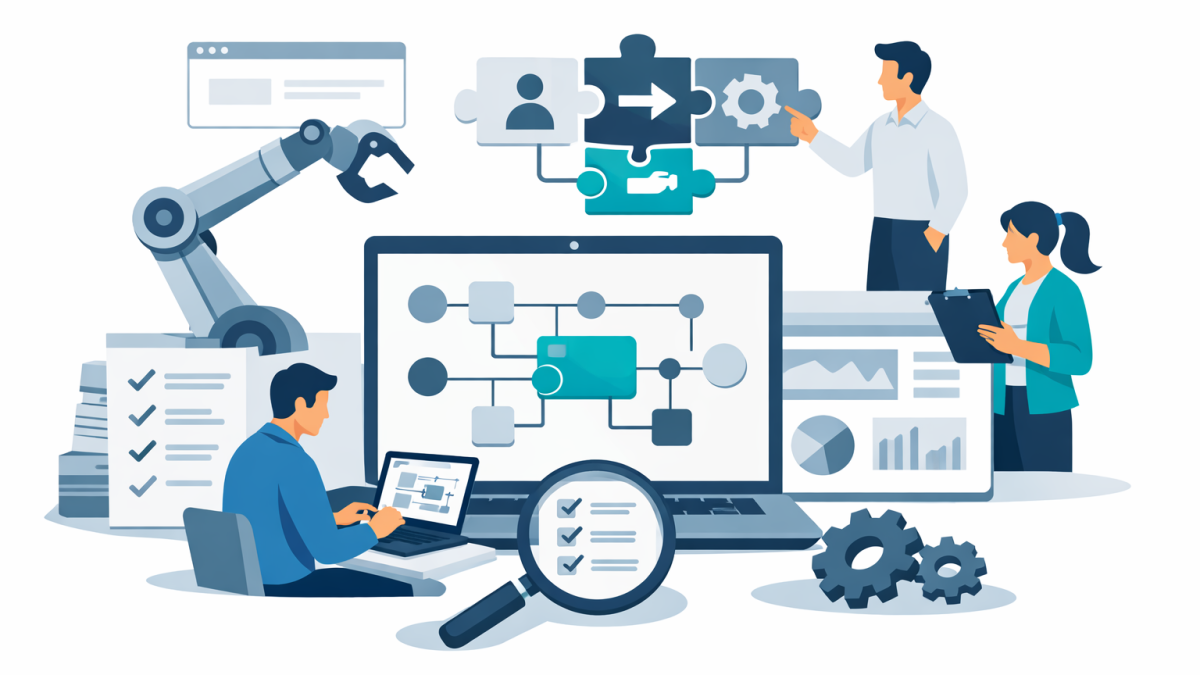
There is a point in every AI workflow where the obvious next step becomes slightly ridiculous.
For me, that point was asking GitHub Copilot to build an agent whose job was to build or automate other agents.
It sounds like recursion for the sake of theatre. It is not.
It is one of the most practical patterns I have seen for turning AI from an occasional assistant into a reusable delivery system.
Most Teams Are Still Stuck At The Prompt Layer
A lot of adoption still happens one request at a time.
Someone opens chat, asks for help, gets a decent answer, then starts over again tomorrow. That is useful, but it does not compound very well. All the context lives in the conversation. All the operational knowledge has to be reintroduced. Every workflow begins from near zero.
That is exactly where custom agents become interesting.
An agent lets you encode role, sequence, constraints, and expected behaviour once, then reuse it. Instead of hoping the model remembers how your team likes to work, you give it an operating pattern it can follow repeatedly.
Once you understand that, the next move becomes obvious: use the AI to help build those reusable behaviours faster.
This Is More Practical Than It Sounds
In the New Breakpoint session on spec-driven development, one of the best lines was effectively this: if you want to build an agent, ask an agent to help you build the next one.
That is not a gimmick. It is a workflow shortcut.
If I already know the repetitive task I want to automate, I do not need to hand-author every instruction file from scratch. I can describe the task, the sequence, the tools, the constraints, and the expected outputs, and then have Copilot draft the agent structure for me.
From there, my job becomes review and refinement.
That is a better use of time than staring at a blank file trying to remember the exact wording for every guardrail.
The Value Shows Up In Painful Work First
The best agent candidates are rarely glamorous.
They are the annoying, repeatable tasks that experienced engineers keep postponing because they are important but tedious. Documentation passes. repetitive validation. backlog triage. standards enforcement. resource discovery. compatibility checks. the work that burns attention without creating much excitement.
That is why I find the agent-building-agent pattern useful.
You identify a workflow with too much manual repetition. You capture how the job should be done. Then you get Copilot to turn that into an operational scaffold. Once that exists, you stop paying the setup cost every time.
Why The Spec Still Matters Here
This only works if you are clear about what the agent should actually do.
If you ask Copilot to “make me an agent for this repo,” you will get something generic. If you explain the trigger, the inputs, the tools it can use, the conditions it must check, the outputs it must produce, and the handoff to the next step, the draft becomes much more useful.
So even here, the real leverage is not magic. It is specification.
The agent that builds other agents is still only as good as the clarity of the instructions used to create it.
That is why I do not see recursive agenting as a replacement for thinking. I see it as a multiplier on well-structured thinking.
What Worked About It
The biggest gain was speed to first useful version.
I did not need perfection in the first pass. I needed a concrete starting point that reflected the workflow I was trying to automate. Copilot was good at producing that draft structure quickly.
After that, the familiar engineering loop kicked in. Inspect. Trim. tighten. add missing constraints. remove generic fluff. test whether the agent behaves the way I intended. Then iterate.
That is exactly how I would improve code, and it turns out to be a good way to improve agents too.
The second gain was knowledge capture. Once an agent exists, a workflow that used to live in one person’s head becomes more legible and repeatable. That matters more than people think.
In a lot of teams, valuable operating knowledge is still trapped in habits and tribal memory. Custom agents are one way of pulling that into something reusable.
Why This Matters More As The Tools Mature
This pattern gets more valuable as the underlying tools get more capable.
GitHub has been moving Copilot toward more agentic execution, including task iteration, broader repo awareness, and stronger support for delegated work. Spec Kit is pushing a structured workflow where constitution, specification, planning, tasks, and implementation become explicit stages rather than one giant prompt.
That ecosystem changes the economics of reuse.
If agents can take on more of the delivery chain, then investing in the quality of your reusable agents starts to look a lot like investing in internal developer tooling. It is not just a convenience feature. It is a force multiplier.
The Real Shift Is From Conversation To System
I think this is the part many people miss when they first experiment with AI coding.
They treat each session like a clever chat.
The more useful model is to treat the interaction as the start of a system. A conversation helps you discover the workflow. An agent helps you operationalise it. A spec helps you make it reliable. A task model helps you reuse it. That is when the value starts to compound.
At that point, asking Copilot to help build another agent is not strange at all. It is just the natural next layer of abstraction.
What I Would Tell Teams Trying This
Do not start by trying to automate your entire engineering organisation.
Start with one recurring pain point that everyone already understands. Make the process explicit. Let Copilot help draft the agent. Then test it on real work.
You will learn two things quickly.
First, the model is often good at getting you to a solid first version much faster than doing it manually. Second, weak internal process becomes very visible when you try to encode it for repeated execution.
Both are useful outcomes.
Why I Think This Pattern Will Stick
Every meaningful platform eventually develops layers.
You start by doing everything by hand. Then you script the repeatable parts. Then you build tools that generate or manage other tools. AI-assisted engineering is moving through the same progression, just faster.
That is why I do not think “an agent that builds agents” is a novelty headline. I think it is an early sign of maturity.
Once teams stop treating AI as a one-off helper and start using it to encode repeatable operating behaviour, the whole practice becomes more durable.
And that is when the conversation shifts from “look what the model can do” to something much more interesting: “look what the team can now do repeatedly because the workflow itself has become executable.”
- The Hidden Risk in Enterprise Agentic AI and Silent Failures
- Copilot Memory is Now Default and I’d Disable It in 3 Cases
- Microsoft Agent Framework Foundry MCP and Aspire in Practice
- Why Real-World Agent Architecture Needs More Than Just a Model
